Posts

Showing posts with the label Chemicals

How Will Cooling Appliance Demand Propel Insulation Market Growth?

Image
Factors such as the escalating demand for refrigerators and air conditioners, mounting infrastructure expenditure in developing countries, such as Brazil, China, India, and Russia, and increasing government support toward the installation of insulation systems in buildings are expected to drive the insulation market growth between 2018 and 2025. According to P&S Intelligence, the market will generate $101.3 billion revenue by 2025. Nowadays, governments of several countries are offering regulatory support to the installation of insulation products to improve energy efficiency.  The rising demand for air conditioners and refrigerators, on account of the soaring global temperature and the booming world population, is one of the major contributors to the market growth worldwide. The National Aeronautics and Space Administration estimates that the average surface temperature of the Earth has risen by 2.12 oF in 2020 since the late 19th century.  As per NASA, the years 2016 an...
Burgeoning Demand for Packaging Materials Propelling Need for Extrusion Coatings

Image
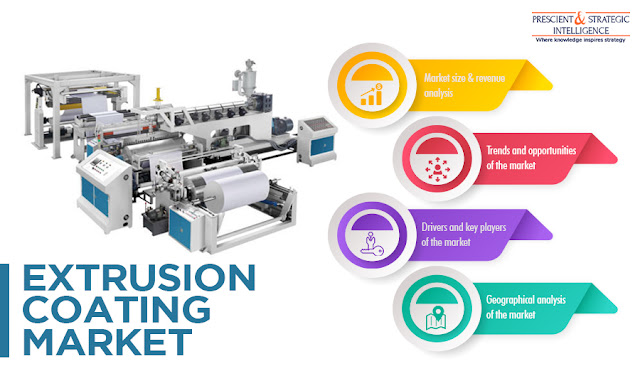
The food and beverage industry is witnessing significant growth due to the rising population and awareness among people regarding their health. The health concerns of people are growing and they are constantly looking out for food items that are healthy . Moreover, the food and beverage industry is witnessing the development of low-calorie, sugar-free, lactose-free and gluten-free food products to cater to the demands of consumers. This is consequently pushing up the demand for extrusion coating materials as these materials play a crucial role in packaging applications owing to their ability to protect food items from various external environmental factors.  In addition, extrusion coating provides an aesthetic appeal to the foods and beverages, thereby making them more attractive and saleable. In addition to the food and beverage industries, there are many other industries, such as healthcare and personal care, which extensively use extrusion coatings. The increasing income of peop...

Why is Worldwide Demand for Conductive Polymers Soaring?

Image
The rising consumer preference of high-performance and lightweight electronic products is driving the demand for conductive polymers across the world. These polymers are extensively used in wearable and flexible electronics, cell phones, various flexible inorganic semiconductors, laptops, displays, and other gadgets. With the surging income of people in emerging economies, such as China, the use of conductive polymers in the manufacturing of lightweight electronic products will shoot up in the forthcoming years. Besides, the ballooning requirement for conductive polymers in the fields of healthcare, chip packaging, medicine production, electromagnetic interference (EMI), display material manufacturing, plastic transistors, sensors, electrical appliances, ultra-capacitors, and electrostatic discharge (ESD) is also expected to propel the progress of the conductive polymers market. Additionally, the burgeoning need for conductive polymers in the field of corrosion control coating, on acc...

How Will Population Growth Propel Biodegradable Mulch Film Demand?

Image
According to the International Agricultural Trade Report 2021 released by the United States Department of Agriculture, the U.S., India, Canada, and Australia produced 376,000 tons, 1.1 million tons, 2.9 million tons, and 790,000 tons of lentils, respectively, in 2020. Furthermore, the Foreign Agricultural Service, Production, Supply and Distribution database reveals that the annual average rice production in China, India, Brazil, and Japan stood at 148,032,000 tons, 116,016,000 tons, 7,866,000 tons, and 7,711,000 tons , respectively, between 2016 and 2021.  Additionally, the USDA also estimates that 147,051,000 metric tons (MT) of barley were produced around the world in 2021. Moreover, the FAO states that 780 million tons of wheat were produced in 2021 worldwide. The surging yield of these food crops, on account of the booming global population, will, therefore, steer the biodegradable mulch film market growth in the foreseeable future. The UN forecasts that the global population...

Why Are U.S. Pharma Companies Using Coding and Marking Systems?

Image
The U.S. is one of the largest producers of pharmaceutical products and also the country with among the most-stringent regulations implemented on this industry. As per the Food and Drug Administration (FDA), in 2019, the country was home to 28% of all the factories in the world producing active pharmaceutical ingredients. The FDA strictly regulates the research and development (R&D), production, clinical trials, marketing, and sale of pharmaceutical products. Companies are mandated to provide all the essential details of the drugs, including their key ingredients, manufacturing and expiry dates, batch number, and manufacturer information, on the packaging. Therefore, the U.S. coding and marking systems market has a bright future ahead, as per P&S Intelligence, as all the details on pharmaceutical packaging are printed by these machines. Similarly, the country is also home to a huge food and beverage industry, which is another major user of these machines. Coding and marking sy...

Growing Need for Lower Carbon Emissions Driving Net Zero Energy Buildings Market

Image
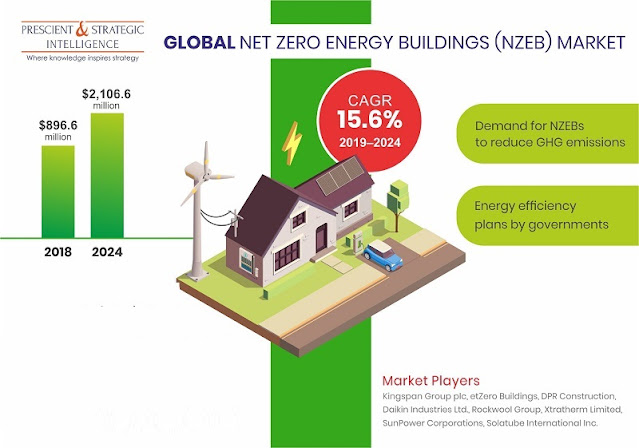
The global net zero energy buildings market was valued at $896.6 million in 2018, and it is predicted to reach a revenue of $2,106.6 million by 2024. According to the estimates of the market research company, P&S Intelligence, the market will demonstrate a CAGR of 15.6% from 2019 to 2024 (forecast period). The market is being propelled by the surging adoption of the net zero energy building concept, especially in the commercial sector of North America. In addition, the launch of energy efficiency plans by the governments of several countries is also fueling the expansion of the market across the globe. Many governments have launched initiatives in recent years to mitigate the use of non-renewable energy sources and encourage the adoption of renewable energy sources at a bigger scale. For example, the California Long-Term Energy Efficiency Strategy Plan was launched by the California Public Utilities Commission (CPUC) to ensure that all new commercial buildings and residential buil...

How Is Demand for Aesthetic Products Fueling Metal Polish Sales in India?

Image
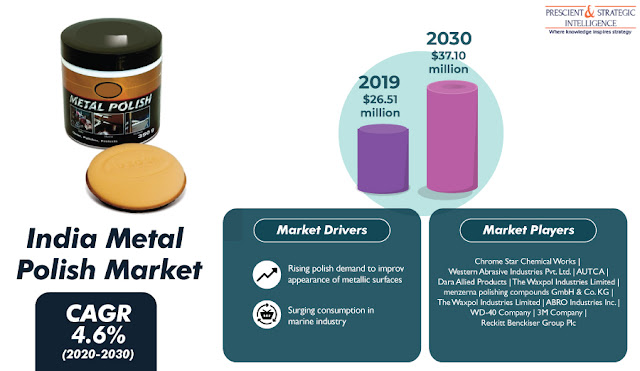
The Reserve Bank of India (RBI) data reveals that the per capita gross national disposable income of India increased from INR 1,44,524 crore in the financial year (FY) 2018–2019 to INR  1,54,349 crore in FY 2019–2020. The apex bank also states that the gross national disposable income of the country grew from INR 1,91,78,372 crore in FY 2018–2019 to INR 2,01,28,484 crore in FY 2020–2021. The surge in disposable income has improved the living standards of the people, owing to which the country is observing the large-scale adoption of aesthetically enhanced products. Thus, the increasing consumption of aesthetically improved products will drive the Indian metal polish market at a CAGR of 4.6% during the forecast period (2020–2030). According to P&S Intelligence, the market revenue stood at $26.51 million in 2019 and it will reach $37.10 million by 2030. The growth can also be credited to the surging use of metal polishes in the marine industry. These polishes are used on a cargo...

Why will Demand for Plasticizers Soar in Asia-Pacific in Coming Years?

Image
With the expansion of the construction sector, on account of the launch of massive construction and infrastructure development projects, especially in the Middle East and Asia-Pacific regions, the demand for plasticizers is growing rapidly across the world. This is because plasticizers are heavily used as raw materials in the production of construction materials, such as tubes and pipes, building interiors, and roof and wall insulation. Additionally, the global construction sector is witnessing stable growth and recovery, which is being mirrored by the ballooning population and rising urbanization rate all over the world. In countries, such as India, Brazil, and China, the increasing urbanization rate is predicted to push up the demand for plasticizers , as these materials are required for manufacturing building materials for roofing, cladding, and various other construction applications. Building materials and tools are extensively required in the construction sector. A large number o...

Booming Manufacturing Sector Propelling Growth of Indian Metal Bonding Adhesives Market

Image
The Indian metal bonding adhesives market was valued at $198.9 million in 2019, and it is predicted to reach a revenue of $343.6 million by 2030, demonstrating a CAGR of 5.2% from 2020 to 2030. The major factors fueling the expansion of the market are the burgeoning requirement for metal bonding adhesives for various industrial applications, such as ultracentrifuge rotors, cooling water pumps, industrial pumps, base plates, and reaction injection molding machines. Furthermore, the surge in the country’s manufacturing sector is also positively impacting the Indian metal bonding adhesives market. As per the India Brand Equity Foundation (IBEF), the manufacturing sector in India reached a value of $91.2 billion between April 2000–June 2019, mainly because of the increasing foreign direct investments (FDI) in the country. Moreover, several government initiatives, such as the ‘Make in India’, have fueled the boom of the sector, thereby creating several avenues for the companies operating i...

Why will Triazine Sales Soar in North America in Coming Years?

Image
The growing use of triazine in the petrochemical industry is propelling its demand across the world. The compound is extensively used as a scavenger chemical for removing hydrogen sulphide (H2S) from crude oil in a process called stripping. H2S concentration is regularly monitored in petroleum reservoirs, owing to the corrosive and flammable nature of the gas. This is also why the operation and exploration of oilfields are carried out under stringent safety protocols. Additionally, sulphate-reducing bacteria can increase H2S concentration and cause petroleum reservoir souring in the produced fluids, which can make the injection of expensive chemical scavengers in various production pipelines necessary. This is done to minimize the operational and corrosion risks. Besides, the mushrooming use of triazine in the medical sector is also driving the expansion of the global triazine market. The compound has beneficial pharmacological traits, such as anti-inflammatory and anti-microbial char...

How Sorbic Acid Allows Cheese and Wine to Tantalize Tastebuds Worldwide?

Image
Global cheese sales increased by 2.3% in value from 2018 to 2019, to reach $114.1 billion. Similarly, the world gulped down 246 million hectoliters of wine in 2018, compared to 241 million hectoliters in 2014. Initially a defining feature of European cuisines, especially French, Italian, and Spanish, these products have now become extremely popular in other countries too, such as the U.S., Australia, and even developing countries, including India and those in Africa and Latin America (LATAM). The key reason behind this rise is the increase in the disposable income, which has allowed people to go for expensive items. Considering the continuous surge in the consumption of such food products, P&S Intelligence expects the sorbic acid market size to grow to $521,126.7 thousand in 2030 from $347,661.0 thousand in 2019, at a 4.7% CAGR between 2020 and 2030 (forecast period). This is because sorbic acid is widely used as a preservative in cheeses, wines, baked goods, frozen meats, and eve...

Soaring Sales of Automobiles Fueling Demand for Adhesive Tapes

Image
The expansion of the automotive industry is driving the demand for adhesive tapes across the world. This is because tapes having adhesive characteristics are extensively used in the automotive industry, primarily in the form of protection tapes and double-sided tapes. Moreover, automobile manufacturers are increasingly preferring to use automotive tapes having adhesive properties over the conventionally used mechanical fasteners in order to reduce the weight of the automobiles. As mechanical fasteners such as screws and bolts increase the automobile’s weight, they are being rapidly replaced by lightweight adhesive tapes. Besides the aforementioned factor, the development of recyclable adhesive tapes is also creating lucrative growth opportunities for the players operating in the adhesive tapes market. Many countries are restricting or banning the use of hazardous chemicals, which are generally needed for producing adhesive solutions. Additionally, various end users are preferring eco-f...

Why Do Oil and Gas Companies Use Fiber Reinforced Plastics Pipes?

Image
The Technical Standards and Specifications laid down by the Petroleum and Natural Gas Regulatory Board, India, states the standards for the design, material, and safety of pipelines used in the oil and gas sector. The Schedule 1E of this regulation compels oil and gas companies to control corrosion and the Schedule 1D mandates the testing of pipeline equipment. Likewise, the Pipeline and Hazardous Materials Safety Administration (PHMSA) of the U.S. government assess the safety and performance of pipelines in the oil and gas sector to avoid unprecedented situations. Thus, the increasing need for oil and gas companies to comply with stringent government safety regulations will help the fiber reinforced plastics pipe market exhibit a CAGR of 8.4% during 2017–2023. According to P&S Intelligence, the market was valued at $2,134.4 million in 2016 and it will generate $3.8 billion revenue by 2023. As these pipes have a high strength-to-weight ratio, excellent resistance to corrosion and ...

Why Are Fleet Owners Turning to Diesel Exhaust Fluid to Mitigate Emissions?

Image
After energy production, transportation is the biggest source of greenhouse gas (GHG) emissions. The population boom is being accompanied by the rising automotive sales. And, since most of the automobiles are still fueled by gasoline (petrol) and diesel, the air pollution problem continues to worsen. Therefore, the world is now focusing on electric vehicles (EV), and till the time the entire transportation sector of the world doesn’t transition to EVs, other steps are necessary to check GHG emissions. One of the ways most countries have adopted is making the engines, fuel, and exhaust systems of conventional automobiles cleaner. As a result, P&S Intelligence expects the diesel exhaust fluid market size to increase to $20,518.0 million by 2023 from $12,191.5 million in 2017, at an 8.8% CAGR during 2018–2023. This is because diesel exhaust fluid, abbreviated as DEF and also known as AdBlue, accomplishes the selective catalytic reduction (SCR) of diesel, to convert harmful nitrous ox...

How Is Healthcare Sector Fueling Electroceramics Demand?

The International Organization of Motor Vehicle Manufacturers (OICA) records that 1,427,074 units, 2,014,055 units, 3,394,446 units, 257,187 units, and 1,435,335 units of automobiles were manufactured in Thailand, Brazil, India, Argentina, and Russia, respectively, in 2020. The rising vehicle production creates an enormous requirement for electroceramics, as they are employed in spark plugs, oxygen sensors, knock sensors, and combustion sensors. Automakers deploy these sensors in internal combustion engine (ICE)-powered vehicles to monitor their major qualitative and performance indicators. Additionally, the booming healthcare industry, on account of the mounting demand for healthcare services, soaring number of public and private partnerships in this industry, and rising expenditure, is expected to drive the electroceramics market at a CAGR of 5.9% during the forecast period (2018–2023). According to P&S Intelligence, the market revenue will grow from $8,590.9 million in 2017 to ...

Why Do Oil and Gas Companies Use Centralizers and Float Equipment?

Image
The U.S. Energy Information Administration (EIA) states that Organisation for Economic Co-operation and Development (OECD) countries and non-OECD countries produced 30.71 million barrels per day and 63.48 million barrels per day of crude oil, respectively, in 2020. Furthermore, the EIA estimates that non-OCED countries and OECD countries consumed 50.40 million barrels per day and 42.02 million barrels per day, respectively, of crude oil in 2020. Additionally, the organization states that global production and consumption of crude oil stood at 94.19 million barrels per day and 92.42 million barrels per day, respectively, in 2020. Further, Our World in Data, a project of the Global Change Data Lab, estimates that gas production in the U.S. and Russia surged from 8,359 Terawatt-hours (TWh) in 2018 to 9,209 TWh in 2019 and 6,691 TWh in 2018 to 6,790 TWh to 2019, respectively. The increasing production and consumption of oil and gas are expected to drive the centralizers and float equipment...

North American PTFE Market To Prosper in Coming Years

Valued at $2,197.8 million in 2018, the global polytetrafluoroethylene market is expected to generate a revenue of $2,953.6 million by 2024. According to the estimates of the market research company, P&S Intelligence, the market will progress at a CAGR of 5.0% from 2019 to 2024 (forecast period). The market is being propelled by the burgeoning requirement for PTFE in the electrical and electronics industry and cosmetic products, such as anti-aging creams, blushes, and pressed powders. PTFE is being increasingly used in barb insulators, brush holders, circuit breakers, cable ties, connectors, battery binders, and fabrication of various semiconductor devices. According to the Semiconductor Industry Association (SIA), more than one trillion units of semiconductors were shipped across the globe in 2018. In addition, in China, the sales value of semiconductors grew by more than 20.5% from 2017 to 2018. Besides, the mushrooming use of PTFE in cosmetics is also predicted to create lucrat...

How Is Pharmaceutical Industry Growth Strengthening Acetic Anhydride Market?

Image
Factors, such as the rising number of geriatric patients and the booming pharmaceutical sector, especially in the Asia-Pacific (APAC) region, are expected to fuel the acetic anhydride market at a CAGR of 2.3% during the forecast period (2020–2030). According to P&S Intelligence, the market was valued at $3,476.1 million in 2019, and it will generate $4,950.4 million revenue by 2030. At present, the market is consolidated in nature due to the presence of eminent players, such as Jubilant Life Sciences Ltd., Eastman Chemical Company, Saudi International Petrochemical Company, Jiangsu Danhua Group Co. Ltd., and Celanese Corporation. The demand for acetic anhydride is primarily driven by the flourishing pharmaceutical industry in developing countries of the APAC region, such as India, Indonesia, Thailand, and China. The growth in the pharmaceutical industry in such countries can be ascribed to the mounting investments being made in research and development (R&D) activities in the ...

Why Is Levulinic Acid Majorly Produced via Bio-Based Methods?

Image
Derivatives of levulinic acid, such as diphenolic acid, succinic acid, methyltetrahydrofuran (MTHF), hydroxymethylfurfural (HMF), sodium levulinate, and ethyl levulinate, are being increasingly used in the personal care, fuel, and food and beverages industries. For example, personal care product manufacturers are increasingly using sodium levulinate as a skin conditioning agent in cosmetics. Thus, the booming food and beverage, personal care products, and fuel sectors will accelerate the consumption of levulinic acid in the upcoming years. Additionally, the rapid commercialization of bio-based production methods will drive the levulinic acid market at a CAGR of 8.8% during 2020–2030. According to P&S Intelligence, the market revenue is projected to rise from $27.2 million in 2019 to $60.2 million by 2030. As the market is still in its nascent stage, it holds immense potential, as this acid and its derivatives help in reducing manufacturing costs and achieving economies of scale. H...

How Is Rising Steel Production Propelling Graphite Market Growth?

Image
A number of factors, such as the expanding electronics sector, burgeoning steel production, and soaring lithium-ion (Li-ion) battery demand, are expected to fuel the graphite market at a CAGR of 7.4% during the forecast period (2020–2030). According to P&S Intelligence, the market revenue will rise from $19,092.9 million in 2019 to $36,889.1 million by 2030 . In recent years, the increasing usage of graphite in pebble-bed nuclear reactors, for generating electricity from uranium fuel, has become a prominent market trend. The burgeoning production of crude steel, on account of the surging need for steel and steel products in the oil & gas, residential, automotive, and construction sectors, is one of the key contributors to the market growth, globally. According to the World Steel Association, 1,864.0 million tons of steel was manufactured across the globe in 2020. The consumption of graphite in the steel industry is increasing, owing to its excellent durability, exceptional stre...